University of New Haven MPH candidates presented research at the Connecticut Public Health Association’s annual conference, exploring critical issues in community health, behavioral patterns, and health equity.
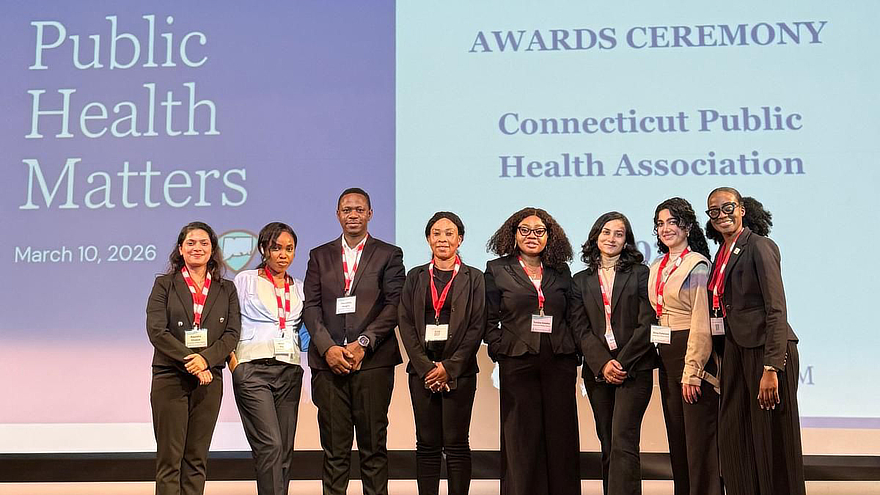
We recently had the opportunity to present our research at the , a statewide gathering of students, researchers, and public health professionals committed to improving population health. The conference theme, Public Health Matters: People. Purpose. Progress, reflects the collective effort to advance health equity and strengthen communities across Connecticut.
For us, this experience was more than just presenting a poster. It was an opportunity to share our work, engage with professionals in the field, and reflect on how our research contributes to real-world public health practice. Below, we share our individual reflections from this experience.
Fouzia Noor ’26 MPH
This was my first time presenting at a professional conference, and it was a very valuable learning experience for me. I was able to share my work with a diverse group of students and public health professionals who are committed to advancing community health.
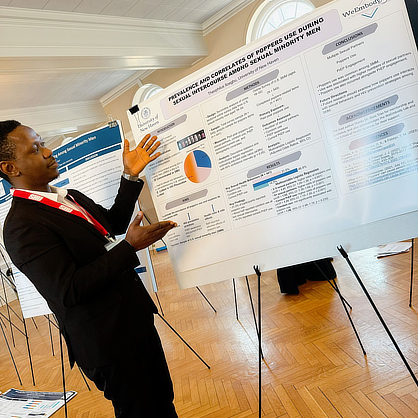
The focus of my poster was to examine whether there was an association between spiritual or religious coping and disordered eating among sexual-minority men. My findings highlight the importance of considering spirituality or religiosity when assessing unhealthy weight control behaviors and muscle-enhancing behaviors in this population.
My preparation through the and my MPH coursework played a significant role in preparing me for this experience. My coursework in biostatistics and epidemiology provided a strong foundation in study design and statistical methods, which allowed me to better understand my project and clearly present my results. I am especially grateful to my mentor and my collaborators in the WE Lab for guiding me throughout the research process and helping me refine my poster.
Overall, attending and presenting at the conference was an inspiring experience. It helped me build confidence in presenting my research and deepened my understanding of the wide range of public health initiatives taking place across Connecticut. This experience reinforced my interest in continuing my work in public-health research to improve community-health outcomes.
Theophilus Iloegbu ’26 MPH
I presented my poster examining the prevalence of popper use among sexual-minority men in the United States and its association with sexual behaviors and HIV-prevention practices.
One key takeaway from my research is that popper use remains relatively common in this population and is associated with having multiple sexual partners and current PrEP use. These findings highlight the importance of considering substance-use patterns when designing HIV-prevention strategies.
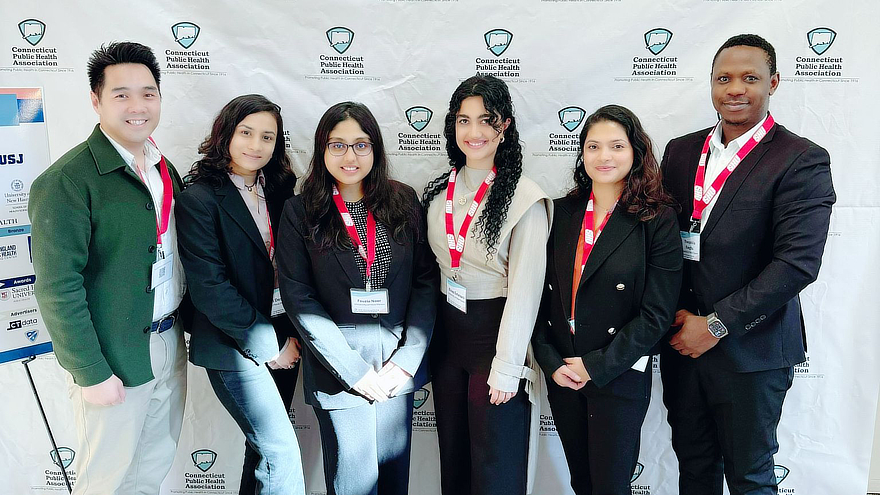
While I have presented research at academic conferences before, this was my first time presenting a poster at a professional conference. It was a valuable experience that allowed me to engage directly with public-health professionals, discuss my findings, and strengthen my ability to communicate research in a clear and accessible way.
My preparation through the WE Lab and my coursework was essential to this process. Developing the research, analyzing the data, and translating the findings into a visually engaging poster strengthened both my research and communication skills. Support and feedback from Dr. Tran, our research director, and colleagues in the lab were especially helpful in refining my work.
Presenting at this conference strengthened my interest in public-health research and community-health initiatives. It also provided an opportunity to connect with professionals in the field and further develop skills that will support my future work in research, public health practice, and health promotion.
It was exciting to see the range of public health research being conducted and to present my work alongside other researchers committed to advancing health equity.
Contact
Get the highlights!
Stay up to date with our weekly e-newsletter, highlighting stories from around the University and media clips featuring our faculty experts.
Recent News
The ºÚÁÏÍø³Ô¹Ï Blog

Health Sciences and Marine & Environmental Sciences Programs Launch Interdisciplinary Collaboration
University News

University of New Haven Faculty Earn Three Connecticut DOT Research Awards in a Single Year
The ºÚÁÏÍø³Ô¹Ï Blog

University of New Haven Student Explores the Power of Peer Support in Youth Mental Health
The ºÚÁÏÍø³Ô¹Ï Blog
