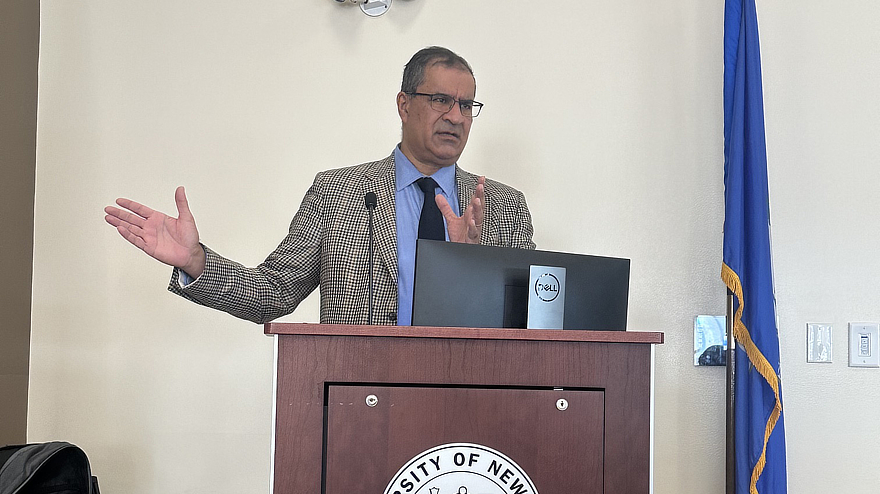
Olena Lennon, a practitioner-in-residence in national security, shares the significance of the transition in power in the Central European country of Hungary and explains why engaged citizens can have such a profound impact on the direction of their country.
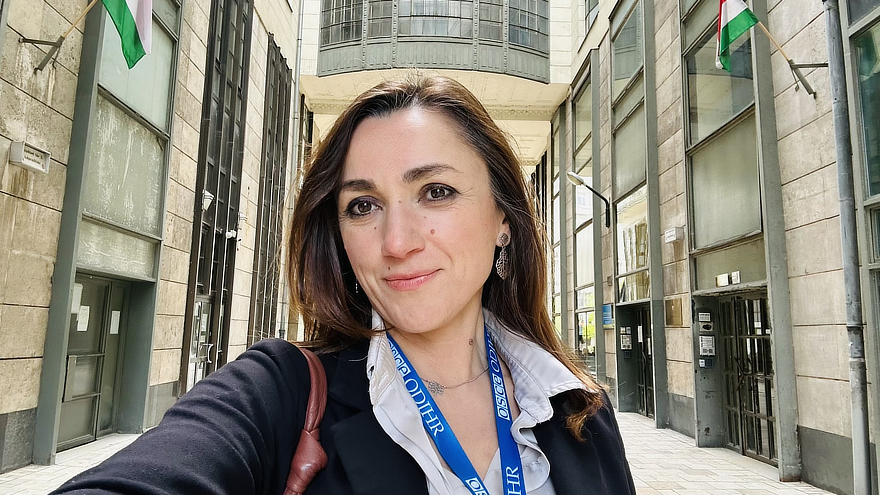
I recently had a unique opportunity to participate in an Organization for Security and Co-operation in Europe (OSCE) Election Observation Mission (EOM) during a parliamentary election in Hungary.
This was my seventh election observation mission, but the first one I have participated in within a European Union member state. My previous six missions were all in so-called transitional democracies outside the EU.
That is notable because election observation missions are typically deployed in countries where there are concerns about the fairness, transparency, or integrity of the electoral process. It is fairly uncommon for such missions to be conducted in EU member states, which generally have relatively well-functioning democratic institutions.
I was really excited to have been selected for this mission, as Hungary’s parliamentary election was expected to be of historic significance, presenting the most serious challenge to Prime Minister Viktor Orbán’s 16-year rule, the longest uninterrupted tenure of any leader in the European Union.
The election was followed particularly closely in Ukraine. As a member of both the EU and NATO, Hungary under often took positions favoring Russia and disfavoring Ukraine, in contrast to most other European countries. Thus, the election result had the potential to influence EU’s military assistance to Ukraine and sanctions against Russia at a critical moment in the war.
The election also attracted international attention because of Viktor Orbán’s notorious friendship with Russia’s president Vladimir Putin and that Russian-linked actors and financial support could benefit Orbán’s campaign and strengthen his chances of winning. Orbán had maintained close political and economic ties with Russia throughout Russia’s brutal war against Ukraine, including continuing to substantial amounts of Russian energy, resisting on Russia, and EU assistance to Ukraine.
During the election observation mission, I was one of approximately 30 American delegates among roughly 180 Short-Term Observers (STOs) representing 24 countries. The mission deployed observers across Hungary to observe election-day procedures, vote counting, and the overall electoral process.
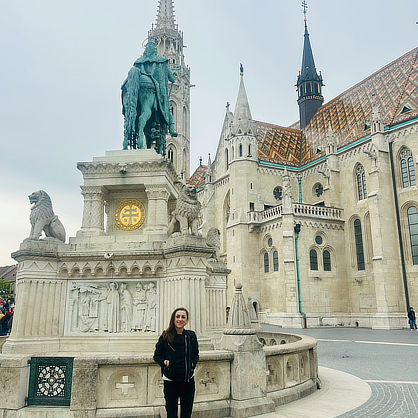
On my previous observation missions, I was usually deployed outside the capital, often to smaller cities or more remote areas. This was the first time I was assigned to remain in the capital for the entire mission. As much as I usually like travelling outside tourist hotspots, I was glad to be assigned to stay in Budapest. The main reason was that as a capital city Budapest was expected to play a critical role in the election, making it one of the most interesting places to be in on an election day. And, of course, it didn’t hurt that Budapest is absolutely stunning. Spending extra time there while carrying out the mission was an added benefit.
Campaign Environment and Pre-Election Expectations
Prior to election day, we were briefed that the campaign environment heavily favored Viktor Orbán and his party, Fidesz. According to the OSCE assessment, the ruling party was expected to benefit from significant that would make it very difficult for the opposition to challenge the status quo.
These systemic advantages were further facilitated by changes in campaign financing laws less than a year before the election that on political campaign spending, allowing Orbán to channel disproportionately larger resources to promote his campaign.
All in all, the among many observers and experts was that there was “a clear bias� in media and news coverage in favor of the ruling party, with substantial government resources spent to promote Orbán campaign themes.
Leading up to the election, much of Orbán’s was centered on themes of security, stability, and the fear of the Russia-Ukraine war “spill-over.�
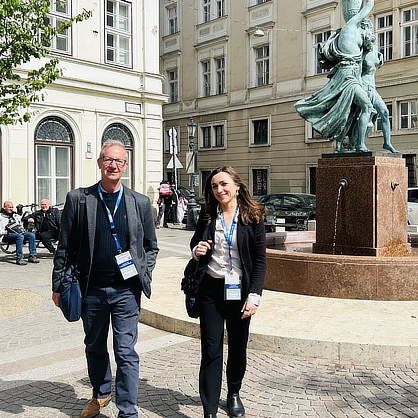
A recurring message suggested that a victory by opposition leader Péter Magyar would draw Hungary into the war in defense of neighboring Ukraine, in which many Hungarians would die aimlessly. Orbán’s campaign materials frequently portrayed support for Ukraine as a direct threat to Hungarian security, often as a choice between peace and war.
While walking through Budapest, I was struck by the saturation of negative campaign posters featuring Magyar alongside Ukrainian President Volodymyr Zelensky, suggesting that Magyar’s loyalties lay with Ukraine rather than with Hungary.
Given the economic challenges facing many Hungarians and widespread concerns about stability, these messages appeared politically powerful and likely resonated with portions of the electorate. Hungary is one of the in the EU, despite being one of the highest recipients of – a disparity that has fueled concerns about government corruption.
At the same time, the prominence of Ukraine in the campaign reflected Hungary’s unique position within Europe. As a neighboring state to Ukraine and a country whose government had frequently disagreed with its European partners over policy toward Russia and assistance to Ukraine, questions of war, peace, and national security occupied central place in domestic political debate.
Based on pre-election assessments of the uneven playing field between the two political contenders, it seemed rather unlikely that Péter Magyar would be able to unseat Viktor Orbán.
Election Day in Budapest
On election day, as we traveled from polling station to polling station across Budapest, one thing that stood out to me immediately was that there always seemed to be long lines of voters waiting to cast their ballots. Our initial impression was that turnout was rather high. The official results later confirmed this, reporting a of 80 percent.
As we were observing the closing procedures and vote count at one of the polling stations, we began hearing fireworks in the distance. We were puzzled, as the official results had not yet been announced and it seemed premature for either side to be celebrating based solely on exit polls.
Then reports began circulating on social media that Viktor Orbán the election calling the election result “painful, but clear.� The news came as a surprise, and we were initially skeptical of its accuracy. Many observers had expected Orbán to challenge the outcome if the election did not turn out in his favor.
As we left the Local Election Center (LEC) around 2 a.m. on Monday following election day and headed back to the hotel, we could still hear loud music from a victory rally held by Péter Magyar and his supporters. The celebration later went viral in part because of the now-famous “dancing politician� moment, when Hungary’s health minister-designate Zsolt Hegedűs spontaneously broke into a celebratory dance.
It was remarkable to be in Budapest on election day and in the following few days. There was a palpable sense that something historic was unfolding, that an outcome many had considered unlikely, if not impossible, had been made possible by people actually showing up.
Despite the considerable political, financial, and organizational advantages enjoyed by Viktor Orbán’s campaign, voters ultimately chose a different path. Of course, Péter Magyar’s win was not going to immediately propel Hungary and Europe into a brighter future, but the fact that electoral outcomes could still be surprising even in highly corrupt political environments was an empowering message in and of itself.
The OSCE’s , based on the aggregated observations of its election monitors, concluded that, despite an uneven playing field between the competitors, voting and counting were conducted fairly, professionally, and transparently, with election officials generally administering procedures in accordance with established requirements.
Who is Péter Magyar?
Péter Magyar’s rise to power was one of the most remarkable political developments in modern Hungarian history. A former insider of Viktor Orbán’s Fidesz party and the ex-husband of former Justice Minister Judit Varga, Magyar with Viktor Orbán’s government in 2024, accusing it of corruption, cronyism, and abandoning the rule of law.
Within two years, he transformed the newly established Tisza Party into Hungary’s leading opposition force, which ultimately defeated Orbán after sixteen years of uninterrupted Fidesz rule, marking one of the most significant opposition victories against a long-entrenched populist government in Europe in recent years.
Perhaps the best description the Péter Magyar’s political phenomenon was offered by the The Atlantic’s who said Péter Magyar’s win, “would be like an ex-MAGA Republican named Peter American winning the Democratic nomination with the endorsement of Alexandria Ocasio-Cortez and Marjorie Taylor Greene.� (“Magyar� literally means “Hungarian� in the Hungarian language.)
Magyar did not only manage to break from the ruling party, but he succeeded in attracting support from conservatives disillusioned with Orbán, centrists, liberals, and many voters who had previously disengaged from politics, largely by focusing on corruption, government accountability, and public services rather than ideological issues.
Magyar’s First Months in Office
Since taking office in May 2026, Prime Minister Péter Magyar has focused on reversing several key policies of the Orbán era. His government pledged anti-corruption reforms and with the European Union to release approximately 16 billion euros in funds that had been frozen over corruption and rule-of-law concerns during Viktor Orbán’s tenure. He also moved to Hungary’s controversial Sovereignty Protection Office, which critics argued had been used to pressure journalists, civil society organizations, and political opponents.
In foreign policy, Magyar has shifted Hungary toward a more pro-European and pro-Western posture, and he has emphasized with EU and NATO partners.
While Magyar has sought to distinguish his government from Orbán’s approach to Ukraine and Russia as well, the shift has been measured rather than fundamental.
Thus, Magyar's government his predecessor’s two-year veto on partially reimbursing EU countries for weapons they send to Kyiv, but reaffirmed Hungary’s to provide any direct military aid to Ukraine. He also Hungary’s veto on Ukraine’s EU membership bid but opposed Ukraine’s entry into the European Union.
While more outspoken in Russia’s aggression and supporting Ukraine’s territorial integrity, Magyar nevertheless stated that Hungary would continue Russian oil, citing the country’s geographic constraints and budgetary considerations. It remains to be seen whether Magyar’s government will pursue a more fundamental realignment in favor of Ukraine and a more assertive approach toward countering Russia.
Takeaways from Hungary’s Election
All in all, it was a privilege to witness such a historic election firsthand. Despite widespread concerns about the unevenness of the contest and despite the considerable advantages enjoyed by the incumbent government, an exceptionally high voter turnout demonstrated the power of citizen participation and the ability of voters to shape their country’s future through democratic means and a peaceful transfer of power.
The experience was particularly inspiring in a year when the United States will hold midterm elections, which traditionally attract lower levels of voter participation despite their importance. Hungary’s election served as a reminder that democratic outcomes are not predetermined and that engaged citizens can have a profound impact on the direction of their country.
Contact
Get the highlights!
Stay up to date with our weekly e-newsletter, highlighting stories from around the University and media clips featuring our faculty experts.